Cut-mango Manga Achar
Chopped raw mango, gingelly-oil tempering, mustard, chilli, curry leaves, fenugreek and asafoetida in a short source-specific process.
Kerala · Indian pickles · reviewed 2026-08-28
Kerala mango pickle is not one universal formula. Kerala Tourism distinguishes a cut raw-mango family (Kadumanga), a tender whole-mango family (Kannimanga), and sweet mango pickle traditions. This page follows the Tourism Department’s cut-mango Manga Achar culinary reference and keeps its storage claims deliberately conservative.
Regional identity
Kerala Tourism uses the name Manga Achar for its mango-pickle recipe and separately describes several Kerala mango-pickle families. Its cut-mango overview names Kadumanga as a raw-mango-piece style, while Kannimanga uses small tender mangoes whole. That distinction matters in the kitchen: cut pieces expose more surface area and can be combined quickly with a cooked or tempered spice base, while a whole tender-mango cure follows a different physical process.
This page does not turn those names into interchangeable synonyms. It also does not invent Malayalam script from machine translation. The reviewed English/transliterated name Manga Achar is used here; native-script display can be added after separate editorial review.
Chopped raw mango, gingelly-oil tempering, mustard, chilli, curry leaves, fenugreek and asafoetida in a short source-specific process.
Small unripe mangoes handled whole belong to a different Kerala family and should not inherit this page’s cut-mango handling assumptions.
Jaggery/sugar-led variants have different concentration and preservation questions. Sweetness alone still does not certify ambient storage.
Source-attributed reference batch
The Kerala Tourism recipe publishes household measures rather than a complete preservation specification. Pohabook keeps those measures as supplied instead of inventing gram conversions for a cup of chopped mango, an unspecified amount of water, or “salt to taste.” Cut size, packing, ingredient density, and household spoons vary, so false metric precision would imply evidence the source does not provide.
| Ingredient | Kerala Tourism measure | Culinary role / evidence note |
|---|---|---|
| Chopped mango | 1 cup | The Kerala Tourism recipe uses chopped mango. Its separate Kerala overview identifies the cut-mango family as Kadumanga and describes it as raw mango pieces. |
| Dried red chilli | 2 | Tempering and heat. |
| Green chilli, chopped | 1 | Fresh heat in the finished pickle. |
| Chilli powder | 3 tbsp | Colour and chilli heat; not a preservation guarantee. |
| Fenugreek seeds, dry-roasted and powdered | 1 tbsp | Characteristic bitter-aromatic spice note. |
| Asafoetida powder | 1 tbsp | Aromatic seasoning in this source-specific version. |
| Mustard seeds | 1 tsp | Tempering spice in the gingelly oil. |
| Curry leaves | As needed by the source method | Kerala aromatic cue used in the tempering. |
| Gingelly oil | 2 tbsp | Tempering and flavour; oil alone does not establish shelf stability. |
| Salt | Added to taste in the source | Seasoning. Do not reverse-engineer a safety ratio from an unspecified amount. |
| Water | Amount not specified by the source | Briefly boiled with the spice base. Because the exact amount and final acidity are not validated, Pohabook does not make a room-temperature preservation claim. |
Do not “fix” the missing preservation data by guessing. The source does not specify a validated final acidity, a canning process, a tested ambient-storage duration, or a preservation-critical salt concentration. That is a reason to keep the storage lane conservative, not a reason to fabricate numbers.
Step-by-step
For this cut-mango reference, use the Kerala cut-mango family rather than a tender whole Kannimanga method. Kerala Tourism distinguishes raw cut mango from tender whole mango and sweet mango pickle families. Do not borrow curing ratios from one family and apply them to another.
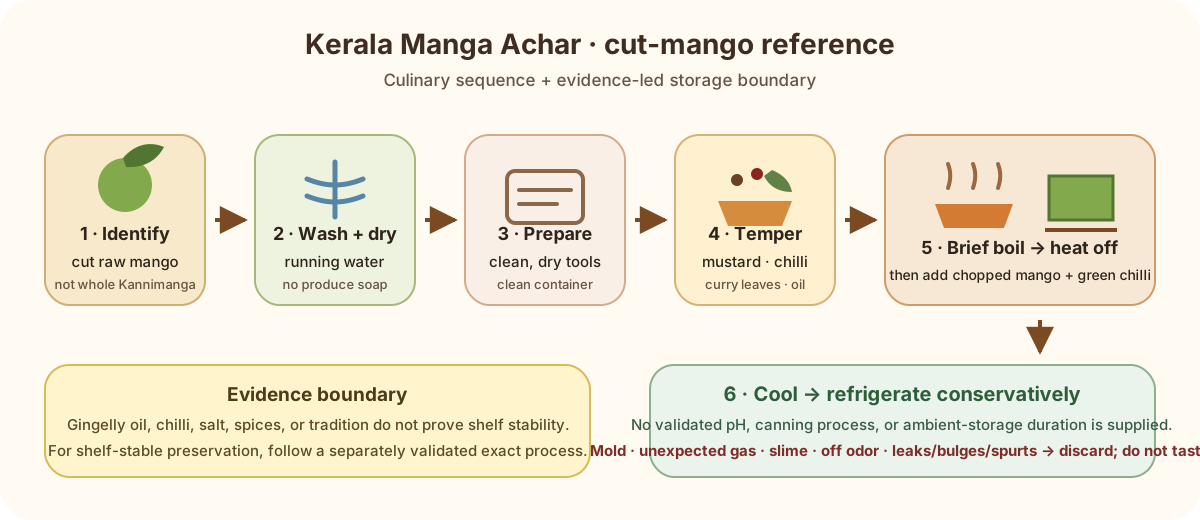
Wash fresh mango under running water. FDA guidance does not recommend soap, detergent, or commercial produce wash. Remove damaged or rotten areas. Dry the washed fruit with a clean cloth or paper towel, then use a clean board and knife.
Have the pan, spoon, bowl, and storage container ready before tempering. A dry spoon is useful for reducing avoidable water introduction during serving, but dryness by itself is not a validated preservation process.
Follow the Kerala Tourism culinary method: heat gingelly oil, splutter mustard seeds, add broken dried chilli and curry leaves, then switch off the flame before adding the ground spice ingredients. This is a flavour and process step, not proof that the food is shelf-stable.
The source then adds chilli powder, asafoetida, and fenugreek, returns to light heat, adds water, and boils the mixture briefly. Keep the source sequence intact instead of inventing a canning process around it.
Kerala Tourism adds the chopped mango and green chilli after switching off the flame, then adds salt and mixes. This short-process character is one reason this page remains distinct from long-cured oil-and-salt mango pickle references.
The culinary source does not provide a validated shelf-stable canning process, final acidity target, or tested ambient-storage duration. For this evidence-limited home reference, cool appropriately, transfer to a clean container, refrigerate, and use clean utensils. If you need a shelf-stable product, follow a separately validated preservation process rather than improvising from this page.
Traditional household variations exist. If your family method changes the water, salt, acid, oil, heat treatment, mango maturity, or maturation/storage approach, treat it as a different formulation and use evidence appropriate to that method.
Spice and oil roles
Tempered in the gingelly oil in the cited recipe. It contributes aroma and a familiar pickle cue; it is not a room-temperature safety control by itself.
Dry-roasted and powdered in the Kerala Tourism method, adding a bitter-aromatic note that balances sour mango and chilli.
The source uses dried red chilli, green chilli, and chilli powder. Their main role here is flavour and heat, not preservation certification.
An aromatic seasoning in this source-specific version. Pohabook does not add health claims or claim that it controls foodborne hazards.
Part of the tempering and a strong Kerala culinary signal in this recipe. They do not determine storage status.
Used for tempering and flavour. Oil coverage or oil use must never be treated as proof that a low-acid or evidence-limited batch can stay at room temperature.
Preservation and storage
The Tourism Department method briefly boils a water-and-spice base and then mixes in chopped mango after the heat is switched off. It does not publish a validated canning process, target pH, tested acid concentration, preservation-critical salt ratio, or shelf-stable processing time. NCHFP guidance for tested pickled and fermented foods emphasizes that acidity and ingredient proportions can be safety-critical; those rules should not be reverse-engineered onto a traditional formula that was not presented as a tested canning recipe.
Allow the preparation to cool appropriately, transfer it with clean utensils into a clean container, and refrigerate. Pohabook intentionally does not publish an exact use-by duration for this source-specific home formulation.
Keep the preparation refrigerated, use a clean utensil, avoid introducing food debris or unnecessary water, and return it promptly to refrigeration after serving.
Do not improvise from this page. Use a separately validated preservation process with the exact formulation, acidity, proportions, container, and processing method required by that authoritative source.
Record the preparation date and the method/source followed. A date helps rotation and troubleshooting, but it does not turn an unvalidated process into a shelf-stable one.
What does not prove shelf stability: gingelly oil, chilli, fenugreek, asafoetida, salt, a familiar family method, a jar that looks fine, or the fact that another pickle survived at room temperature.
Stop / discard decision
Discard the pickle when you see visible mold, unexpected persistent gas or foaming where fermentation is not intended, slime or an unusual texture, an off odor, leaking, bulging or spurting containers, or another change that makes safety uncertain. USDA FSIS guidance for suspicious canned or jarred foods reinforces the do-not-taste boundary. A normal-looking batch is not proof that a process was validated, and a suspicious batch should not be sampled “just to check.”
Oil-rich or low-acid conditions deserve extra caution. The presence of spices or a layer of oil does not neutralize botulism or other food-safety concerns. If you are unsure whether your actual method matches this reference, use the exact authoritative method you followed or discard rather than guessing.
Related Indian pickle journeys
Sources and provenance
Source-role rule: Kerala Tourism establishes the regional culinary method and family distinctions. FDA, NCHFP and USDA FSIS establish modern handling and preservation boundaries. A culinary source does not become a shelf-stability authority simply because the recipe is traditional.
Image provenance: the process map on this page is original Pohabook artwork stored in-repository. Finished-pickle photography is intentionally withheld until one exact asset has creator, source, license/version, attribution requirements, transformation history, and confident dish identification.
Audio: intentionally deferred for credit efficiency. When added, priority is a short `Manga Achar` pronunciation/introduction using the licensed Indian female house voice with provider, voice, version, and commercial-use provenance recorded.
Multilingual: reviewed transliteration only in this increment. Malayalam script and translated explanatory/safety prose remain pending separate human/editorial review; raw machine translation is not presented as culinary authority.